
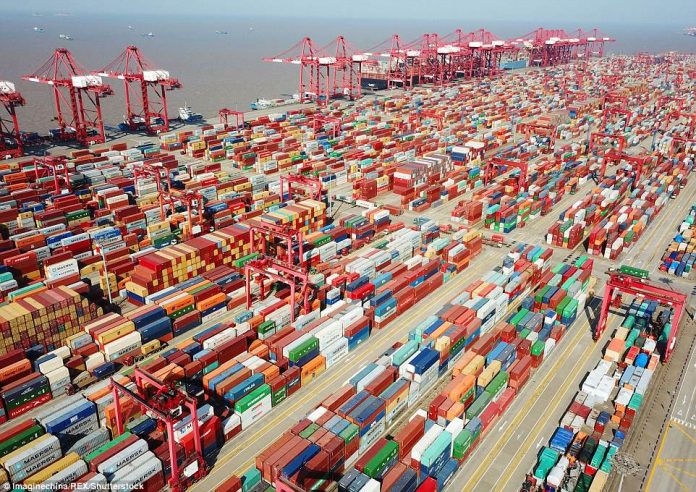
JAKARTA (TheInsiderStories) - Singapore’ Development Bank of Singapore (DBS) sees Indonesia will be included in the Southeast Asian countries who get benefit from the diversification of the global supply chain, as businesses and governments worldwide look at ways to diversify production from China following disruptions caused by the COVID-19 outbreak.
In recent years, ASEAN countries have seen rapid growth in their economies and expanding consumer markets. Larger volumes of goods are being transported around the region, resulting in an ever-growing requirement for supply chain solutions.
China has traditionally dominated the manufacturing landscape, but the COVID-19 outbreak in the country, plus the rising costs, has resulted in investors looking southeastwards to the emerging economies that seem full of promise. Companies in the manufacturing sector, especially those involved in the labor-intensive production of automotive and electronic parts, have already started shifting their operations to Indonesia and Thailand, mainly because of the lower cost of labor there.
“Diversification will continue on and markets like Vietnam, Bangladesh, India, Indonesia, benefit from that diversification,” DBS group head of global transaction services John Laurens said during a virtual media briefing on Monday (07/07), listing the ASEAN countries and other low-cost markets as beneficiaries of the shift.
The COVID-19 pandemic has severely disrupted the global supply chains. The World Trade Organization has estimated that global trade will fall 18.5 percent year-on-year in second quarter of this year. Meanwhile, the International Monetary Fund has projected the volume of goods and services trade to shrink by 12 percent in 2020.
The COVID-19 has also made some companies question their heavy reliance on China, while the country’ ongoing trade war with the United States (US) has also burdened the industries with additional tariffs. The major economist sees that the shift of major supply chains into ASEAN countries would be part of the “new normal” for businesses.
Indonesia is fast becoming the new darling of the ASEAN growing economies. The dynamic archipelago has the potential to be the seventh-biggest by the year 2030, according to a report from the McKinsey Global Institute. Indonesia also ranks higher than rival Vietnam in the United Nation’s Competitive Industrial Performance Index. The mean monthly earnings for both medium-skilled and low-skilled workers in Indonesia are lower than in Vietnam, according to the World Economic Forum.
The country has also taken measures to take advantage of the situation, with the government establishing a special task force to attract businesses leaving China and facilitate their relocation to Indonesia.
On June 30, President Joko Widodo announced that seven foreign companies had confirmed plans to relocate production facilities, mostly from China, to Indonesia. He added that 17 more were looking into opening facilities in the country.
The relocation of the seven companies is projected to bring US$850 million to Indonesia while potentially employing around 30,000 workers, based on the Investment Coordinating Board’ estimates.
“I’ve ordered the ministers and the Investment Board head to provide the best services for the industries relocating from China to Indonesia,” Widodo said on June 30 during a visit to the Batang Industrial Park in Central Java.
Luhut Binsar Panjaitan, Indonesia’ coordinating minister for maritime affairs and investment, said his government is offering slots to US businesses in industrial parks. These include the Kendal industrial park in Central Java, a special economic zone with tax incentives.
Another candidate site is Brebes industrial park, one of 89 National Priority Projects selected by President Widodo for development. Around 20 companies have shown an interest in relocating to Indonesia, Panjaitan said. A spokesperson for the ministry added that Panjaitan held talks with the CEO of the US International Development Finance Corporation, a government agency, after Widodo’ communication with President Donald Trump.
However, Indonesia has historically struggled to attract foreign direct investment, which was equal to just 1.8 percent of the country’ gross domestic product in 2019. That was a lower share than regional competitors Vietnam, Thailand and Malaysia.
The World Bank privately conveyed to Widodo last year that Indonesia was missing out. Of the 33 companies, as of October 2019, that had shifted production out of China since the trade spat began, 23 have moved to Vietnam, with the rest relocating to Malaysia, Thailand and Cambodia.
Written by Lexy Nantu, Email: lexynantu@theinsiderstories.com

