
Jakarta Govt Says Free Healthcare Access Improving, in Sign of Ongoing Reforms | Insider sector data
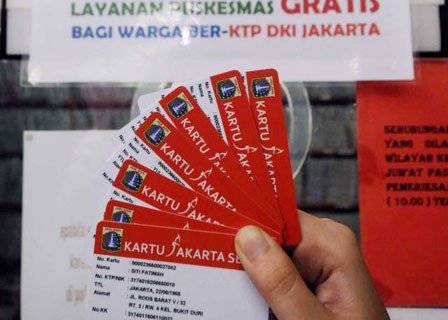
(The Insider Stories)–The Jakarta city government says a previously moribund program to provide free healthcare to some middle- and lower-income residents is beginning to show success, in a sign that the new city administration is continuing a record of proactive, reform-oriented governnance it has begun to establish in a relatively short time in office.
Jakarta city governor Joko Widodo said in a March 27 public hearing on the Jakarta Health Card system, or KJS, that 500,000 new patients have signed up since a recent regulation change clarified the regulatory framework for using the system to access free healthcare for some low- and middle-income city residents. Jakarta has an existing system aimed at providing free healthcare for some residents, but takeup rates have been very low as a lack of clarity over the way the system works had left patients reluctant to apply for free treatment and hospitals unprepared to treat people without cash or health insurance.
The administration has indicated that KJS allow a maximum bill of up to 100 million rupiah ($10,000) per visit although this can be increased in severely urgent cases. The system is managed by the city administration and public health insurer PT Asuransi Kesehatan. Kompas newspaper reported last year that there are 74 hospitals in Jakarta metro area that are to accept KJS: 13 in South Jakarta, 23 in East Jakarta, 15 in Central Jakarta, 11 in North Jakarta and 12 in West Jakarta while there are also three facilities in Greater Jakarta satellite cities that accept the cards: Tangerang Public Hospital, Bogor Mental Health Hospital and Kusta Sitanala Tangerang, a facility that offers treatment for leprosy.
Legislative changes indicate focus on healthcare
In a signal that Widodo may take public health more seriously than previous city administrations, Gubernatorial Regulation no. 14, 2013, which modifies the existing regulation regarding provision of free healthcare, is the second piece of health-related legislation passed by the city administration after Gubernatorial Instruction no. 23, 2013 regulating monitoring of environmental concerns related to construction projects in Jakarta.
The new regulation clarifies the existing Gubernatorial Regulation, no. 187 of 2012, by stating that patients can only qualify if they are poor, orphans, or victims of family violence, traffic accidents or disasters. The existing regulation, issued by the previous city governor, states only that some residents possessing Jakarta residency cards are entitled to free intensive care unit (ICU), intensive coronary care unit (ICCU), neonatal intensive care unit (NICU), high care unit (HCU) and isolation unit services, creating a lack of clarity that has left many patients and healthcare facilities reluctant to subscribe to the system.
Jokowi, as the governor is known, forged a reputation in his previous post as mayor of the city of Central Javanese capital Surakarta (Solo) as a competent, progressive reformer, and is seen by many observers as having the potential to deliver similar results on a bigger stage. Although Widodo has not officially sought nomination as a candidate for next year’s general election and publicly denies any ambition to run, public opinion both at home and show the governor is that the governor would be a popular candidate.
“Blusukan” policy is simple, effective method of governance
Widodo’s governance method is often characterized by the term “blusukan,” which originally referred to unannounced, often televised visits to public-administration offices to monitor official performance in the early days of Widodo’s governorship. The term is now popular with constituents used to a hands-off governance style that many believe contributes to inefficiency by public officials, but who see blusukan as a way of using simple, effective methods to strengthen public services.
In typical blusukan style, Widodo told the hearing that aside from the government providing access to healthcare and more medical facilities, to avoid straining the capacity of the city’s healthcare infrastructure requires the public to take simple preventative health measures such as instilling a culture of environmental preservation.
”Currently in residential areas of Jakarta, water in drainage systems is clogged and unable to flow well because of garbage. In some areas people even throw excrement into the drainage system,” he said.
Widodo added that a regulation will mandate hospitals use formularies with prices set by the health ministry in order to cap costs of medicines, a practice widespread in many countries but yet to gain traction in Indonesia, where medical facilities are often perceived to prescribe expensive or unnecessary medications in order to increase revenue.
Meanwhile , city health services head Dien Emmawati told the hearing that in order to add capacity the city will initially trial small, government-operated family clinics covering 2,500 to 3,000 mid-to-low income residents each, as this may be a more efficient initial step than building large new hospitals.