
Danamon CEO Henry Ho: DBS deal good for banking industry | Sector data
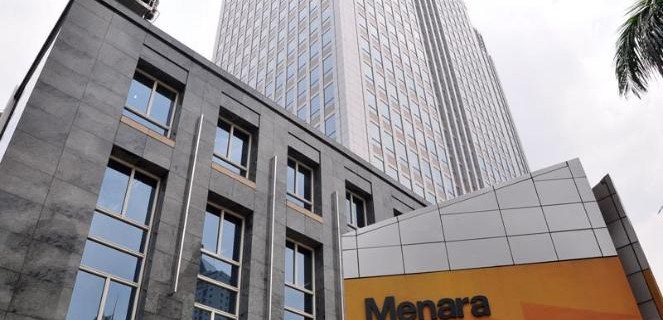
(The Insider Stories) – Singapore’s DBS Group Holdings (DBSM) gained approval from Bank Indonesia (BI) last week to buy a majority holding in PT Bank Danamon (BDNM), paving the way for DBS to potentially buy up to 99% in Indonesia’s sixth-biggest lender by assets in a deal that at up to $7.2 billion could become the largest in the history of Southeast Asia’s economy, which is growing at more than 6% as middle-class incomes rise and economic management and political stability improve.
Approval of the deal took a year after it was initially proposed, and legal documentation isn’t expected to be complete until May. BI is still considering some elements of the deal, including whether DBS will be able to raise its stake in Danamon further after an initial purchase of 40%, a limit Indonesia imposes on ownership of its lenders by foreign banks unless the buyer is able to demonstrate that it is financially healthy and has good corporate governance. DBS announced last year that it aims to buy a 67.4% stake in Danamon that is held by Singapore sovereign wealth fund Temasek Holdings Pte. Ltd., before making a public offer for the rest of the shares.
BI also wants Indonesian banks to be able to access Singapore’s market, where foreign banks are only allowed to own less than 50% of a local lender.
Danamon President Director (CEO) Henry Ho gave his perspective on the deal at a media event.
On the future of Danamon and DBS and the deal’s implications for the banking industry:
Bank Indonesia (BI) is still carrying out the process. If you go by some of the statements made by BI, it looks like they’re processing it. So we will see.
The next step is to merge Danamon and DBS Indonesia. That’s the plan. You have to do it, right? Because once they buy Danamon, they will have a conflict in terms of the single presence policy. So the next natural, logical thing to do is to merge the two. There will be no impact on the business because they will be complimentary. It’s a plus for everybody.
There’s obviously good synergies [between DBS and Danamon]. We first announced it last year and those synergies are still there because Danamon is owned by a valuated bank like DBS. It gives Danamon a stronger, well-supported position to hopefully raise funding at a cheaper cost. Then of course with DBS, because it has got a regional network, it can also help Danamon. DBS also has a good corporate banking business, much bigger than Danamon’s so they will add to the business.
For DBS, getting into Danamon is also good for them because they get into a market like Indonesia, a big, growing market. I think they are also entering into a market in a bank that has a lot of strong focus in the mass consumer market.
I think [the acquisition] is good for the industry, good for everybody. So that is why I think that the central bank is looking at it in a way to make sure that in processing it, it will bring a lot of value to the Indonesian market.
On the Single Presence Policy that allows shareholders to control only one Indonesian bank, defined as ownership of 25% or more of a bank’s shares with voting rights:
I think the central bank will be very practical about the single presence policy. As a general rule, it’s a good policy. I don’t think any foreign bank objects to it because it helps create a healthier banking industry if they can consolidate ownership of a bank to a single group, rather than having one group owning so many banks. I think the important thing is to give the industry players time to comply. Once you do that, I think it’s okay.
At the end of the day, Indonesia is a very strong market. There’s a lot of potential to grow and it makes sense to carry out your business through one vehicle rather than having two vehicles. It is very hard to manage and it’s very costly. So I think everybody agrees.
I think the current policy is good enough. If it needs to be changed from time to time to meet specific needs of a bank, I’m sure BI will be happy to look at those exceptions.
On the Asean Economic Community initiative for regional economic integration by 2015:
In the larger context for the next five years or 10 years, as Indonesian banks become bigger and as they find the potential to grow outside Indonesia, they will work outside. By 2015, the Asean market is going to allow countries within Asean for the financial sector or other sectors to go into each other’s market with ease. I think that will happen. I’m sure the Indonesian banks will find it important to go and support the Indonesian companies, to go out there to other countries. I’m sure there are a lot of Indonesian companies that will go overseas too. It’s a natural thing to follow, right? Once Indonesian companies and Indonesian individuals start doing business outside Indonesia, it makes sense for Indonesian banks to follow them.
On plans for expansion or acquisitions:
It depends, buying banks, you have to look at whether it makes sense to buy or build your own business. So far we have found that building our own business is a better way to do it, to grow rather than to go and buy a bank. But if something comes up along the way, of course we’ll take a look at it.
From time to time, we are looking at opportunities. We are very happy with what we’ve got now. A lot of work to do.