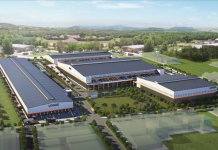
JAKARTA (TheInsiderStories) - Chinese electric vehicle (EV) battery producer, GEM Co. Ltd., aims to double its ownerships in an Indonesian nickel project at Indonesia Morowali Industrial Park (IMIP). Under the framework, Jingmen, the unit of the company, has agreed with partners to increase the stakes from 36 percent to 72 percent.
The parties reject to comment of the news. Initially, the plant designed to produce chemicals used in batteries for EV with an annual capacity of 50,000 tones, was expected to start production by the end of 2020, but was postponed due to the pandemic. The factory would start production in 2022.
Initially, GEM has planned the project together with other China’ stainless and nickel producer Tsingshan Group, a business unit of Contemporary Amperex Technology Ltd (CATL), Japan Hanwa Co. Ltd., and IMIP in 2018. The CATL unit owns 25 percent, Tsingshan 21 percent, and the rest is owned by IMIP and Hanwa.
To support the industrial zones in Central Sulawesi, IMIP plans to list its shares in this year. According to the CEO, Alexander Barus, total investment for the four nickel cobalt factories with High Pressure Acid Leaching technology worth of $3 billion.
Now, there are numbers of nickel processing and refining smelters, such as Nickel Pig Iron, ferro-nickel, stainless steel, and lithium battery components are operated in the industrial areas. He said, four factories in Morowali will produce nickel cobalt cathodes with a total capacity of 240,000 tons of pure nickel.
When this is completed, it will become one of the largest nickel cobalt smelters in the world. In the industrial area, there are also lithium battery recycling plant to built. His company also aimed to build port in the industrial zone.
IMIP is now the biggest player in the Indonesian nickel industry with a percentage even reaching 50 percent since 2018. Based on the official data, in 2014 the nickel industry still controlled by PT Vale Indonesia Tbk (IDX: INCO) by 77 percent, followed by PT Aneka Tambang Tbk (IDX: ANTM) 19 percent, and others 3 percent.
So far, the government had accept various investment commitments in the lithium battery projects in Indonesia. As an example, PT QMB New Energy Minerals has commit to invest $700 million in Morowali.
Then, PT Halmahera Persada Lygend also has committed to pouring out Rp14.8 trillion ($1.05 billion) of investment in Halmahera, North Maluku. And, PT International Chemical Industry disbursed Rp207.5 billion to produce as many as 25 million lithium ion cell batteries which are equivalent to 256 MWh per year.
“PT International Chemical Industry will begin to enter the commercial pre-production stage at the end of 2020 and begin to enter the stage commercial production in 2021,” said director general at the industry ministry office, Putu Juli Ardika in an official statement released on July 29, 2020.
He continued, the government will continues to encourage the investment in the battery development for electric car. He said, Indonesia has the availability of natural resources like nickel and cobalt that can used to support the projects.
The government has formed a team to accelerate the involvement of the industry players to develop the lithium batteries such as state-owned enterprises namely PT Indonesia Asahan Inalum (MIND ID), Antam, PT Perusahaan Listrik Negara, and PT Pertamina. President Joko Widodo has expressed his desired to make Indonesia become the second largest EV production center in Southeast Asia.
He also wants the country have an electric car industry in Indonesia to reduce dependence on fossil energy. The head of state has officially signed into effect a presidential decree that will accelerate the development of EV in the archipelago.
The regulation had been under discussion for more than a year as the president’ intent to pursue cleaner modes of transportation met with nationalistic resistance and demands for protection of local automakers.
Nickel, a metal that is a key ingredient in the production of lithium-ion batteries for the latest generation of EV, is in abundance in Indonesia, giving the country comparative advantage. Widodo said the regulation would ensure that Indonesia’ electric car industry exploits this advantage.
He promised give a tax incentives to draw foreign investment in the EV projects to save the country’ Rp798 trillion dependence on the crude oil imports.
US$1: Rp14,000
Written by Staff Editor, Email: theinsiderstories@gmail.com