
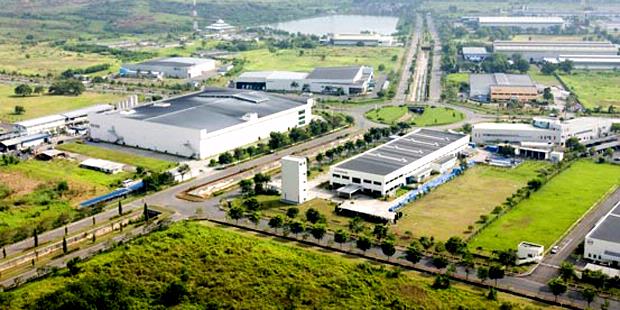
JAKARTA (TheInsiderStories) - The Indonesia government decided to provide tax facilities and services, customs and excise tax to industries investing in the Special Economic Zones (SEZs) in a move to boost investment and help ease doing business.
The tax facilities are in the form of a reduction in the corporate income tax (tax holiday) and tax allowance. Reduction of corporate income tax does not only be given to new corporate taxpayers who make new investments in SEZs, but also for expansion of the existing business.
The tax payers are eligible to benefit from the tax incentives, “as long as they create separate accounting reporting with previous investments,” Coordinating Minister for Economic Affairs Darmin Nasution in Jakarta Friday (April 8) after a coordinating meeting.
Minister Darmin is the Head of the National Council for Special Economic Zones (SEZ).
Those present at the coordinating meeting are including Minister of Trade Thomas Lembong, Minister of Industry Saleh Husin, Head of BKPM Franky Sibarani and Finance Minister Bambang Brodjonegoro.
The meeting also discussed about relaxation of the use of capital goods, which are relocated from other countries, as well as the obligation to use domestic products. “The Customs Office should be given the authority to determine the price,” said Nasution.
The procedure to get those tax incentives are shortened, by filing application to the One Door Investment Service (PTSP) of BKPM and the copy of it is submitted to the SEZ administrator. The same also applies to the filing of tax allowance.
Simplifying the provision of facilities and ease of doing business in SEZs are also given for imported goods. The Government Regulation (PP) No. 96/2015 regulates that the imported goods must include supporting documents and a written statement of the local value content published by the issuing agency certificate of origin in the SEZ. The certificate of origin is required to get a 0% tariff for manufactured goods that have a local content of 40%.
Similarly, for goods released elsewhere in the Customs Area (TLDDP), must be equipped with a certificate of the value of local content issued by the issuer of the Certificate of Origin (Administrator of SEZ).
To simplify the process, the Ministry of Industry asked to delegate the matter to the administrator SEZ as the official publisher of the Certificate of Local Content Value. To that end, the human resources capacity of the SEZ administrator needs to be improved through certification and supply systems.
The coordinating meeting then set the main activities for 9 (nine) SEZs that have been established. Those SEZs are Sei Mangkei (focusing on processing oil palm and rubber), Tanjung Lesung (tourism), Palu (processing of nickel and iron ore, cocoa, sea grass, rattan), Bitung (oil processing, fisheries, pharmaceuticals), Morotai (fisheries, tourism, logistics), Tanjung Api-Api (processing of rubber, palm oil, petrochemicals), Maloy Batuta Trans Kalimantan (processing of palm oil, wood), Mandalika (tourism), and Tanjung Kelayang (tourism).
President Joko Widodo’s administration is preparing a decree to give fiscal incentives to investors planning to invest in special economic zones (SEZ), as the government aims to develop a total of 25 special economic zones (SEZ) by 2019. The SEZs are expected to become centers of economic growth, where manufacturing is integrated with supporting industries.
Franky Sibarani, the Head of the Investment Coordinating Board (BKPM), said that the agency proposed a tax allowance for investors in the SEZs, directly handled by the regional one-stop-service investment board. The BKPM chief also said there would be a special arrangement for land ownership in the SEZ areas.
“The point is that we want to encourage infrastructure development so that it will attract investors [who can develop] special economic zones. There are currently eight zones and we hope to have 17 more by 2019,” he told journalists last week.
Ten of the zones would be dedicated for tourism, with the remainder hosting a variety of activities, from mineral resources to fisheries.
Franky said, the Sei Mangke SEZ in North Sumatra, which hosts palm oil and rubber industries, is an example of an area that would automatically be eligible for tax allowances under the planned new decree. (*)